“He > I” why context matters

I was driving home from the grocery store today and saw a really interesting window sticker on the car in front of me at the red light.  The sticker read:

He > I

As a person with an undergraduate degree in Chemical Engineering I have taken a lot of chemistry.  A year in high school.  Two semesters of basic chemistry in college, two semesters of organic chemistry, a semester of surface chemistry, and too many chemical engineering classes to count.  I know chemistry.  So this window sticker fascinated me.

Helium is greater than Iodine

The light turned, we all started driving, and my brain turned.  Helium is 2 on the periodic chart, and Hydrogen is 1, so Helium is greater than Hydrogen, but that’s about it.  Iodine is…oh my gosh…how can I not remember where Iodine is?  I mean five years of chemistry and I can’t remember that?  What is wrong with me?  But I know it’s not lower than Helium.  Are they talking about some other property of the elements?

A few more minutes of pondering when I realized that the sticker probably wasn’t about Chemistry.  It was probably about God.  Oh.  Right.  Like He, God, is greater than I, a mere mortal.  I came home and told my husband about the story, and he said, “Yeah, that’s totally about God.”  My knowledge from four years of engineering school overwhelmed my zero years of going to church.

Then my lifetime of researching stuff took over and I Googled the sticker.  It’s a clothing store in Hawaii.  Their front page says:

He>I Hale’iwa Hawai’i

Guess I’m an idiot and my husband is an idiot.  The sticker is about Hawaii.  But I don’t get it either.  How does Hawaii come out of He>I?  I can’t get the word play to work.  So I went to the about page of the site and read.  Turns out it IS about God, but not about Chemistry at all.

Their about page says, “Most people have a story about when they first discovered what our logo (HE>i) means – either by figuring it out on their own or having someone share the meaning with them.”

I’m totally sending them my chemistry story.  I think they’ll love it.


Image by Alchemist-hp (talk) (www.pse-mendelejew.de) (Own work) [GFDL 1.2 (http://www.gnu.org/licenses/old-licenses/fdl-1.2.html)%5D, via Wikimedia Commons

Depression and the circle of sadness

As I’ve mentioned before, my husband struggles with depression.  His is a disease that comes on strong and hard and completely disables him for months, only to lift leaving him the same vibrant man he was before the episode hit.  It is really hard for me, who has never experienced the depth of his anguish, to relate.  Thank goodness for animated movies!

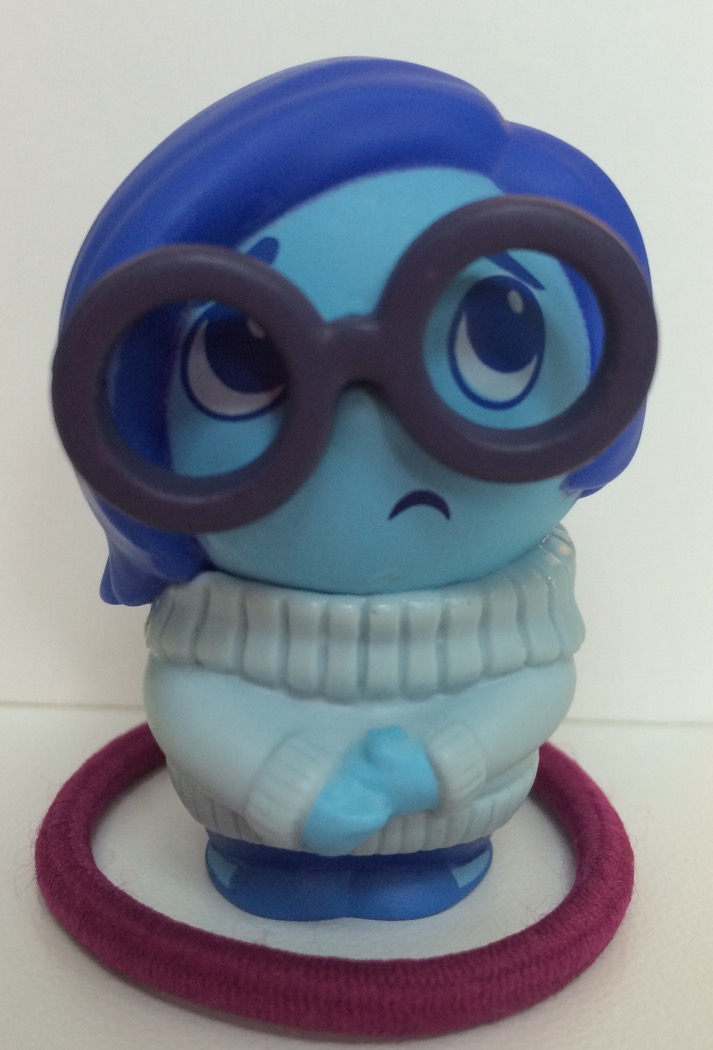
We saw Inside Out when it was released, and were blown away.  It was such a great movie and gave us such an age appropriate vocabulary to talk about feelings with our daughter.  (Cause, you know, two engineer parents don’t necessarily excel at talking about feelings.  We excel about talking about Excel, the spreadsheet tool.)  It’s great to be able to say to the seven year old Afthead, “Hey, what’s going on?  It seems like Fear has taken over the control panel.”

But the most enlightening conversation came about with my husband.  We were chatting about a specific part of the movie when Joy tries to ensure Sadness won’t interfere with Riley’s first day at a new school.  Joy gives everyone a job (Fear has to come up with the worst possible scenarios, Disgust has to help with friends) and Sadness’s job is to “stay in the circle.”  Joy draws a circle on the floor and pushes Sadness into it.   Of course, Sadness doesn’t stay in her circle and causes Riley to cry at school.

My comment to my husband was, “Too bad your Joy can’t shove  your Sadness into a circle.”

He replied, “Oh, my Sadness always stays in his circle, but when he escapes he’s impossible to get back in.”

It was an incredible vision into my husband’s brain.  He is a man guided by Joy, Anger, Fear, and Disgust, but Sadness isn’t really his thing.  I’ve only seen him cry once, and it was when he was depressed.  He doesn’t really do sadness, which just makes his depressive episodes that much more disconcerting.  But it makes total sense when viewed in the Inside Out context.  Sadness gets out of his circle, and takes hold of the controls and only he and Fear run my husband’s brain.  His normal forceful Anger, Joy and Disgust are gone, pushed aside by Sadness.  Eventually time and drugs wear Sadness out and he heads back to his circle to hibernate for years, decades if we are lucky.

Still, I don’t understand his depth of anguish.  Still, I can’t put myself in his shoes, but finally, I have a metaphor for his pain, and a wish.  I hope his Sadness stays in the circle for a long, long time.


A Powerful Snow Day Meme

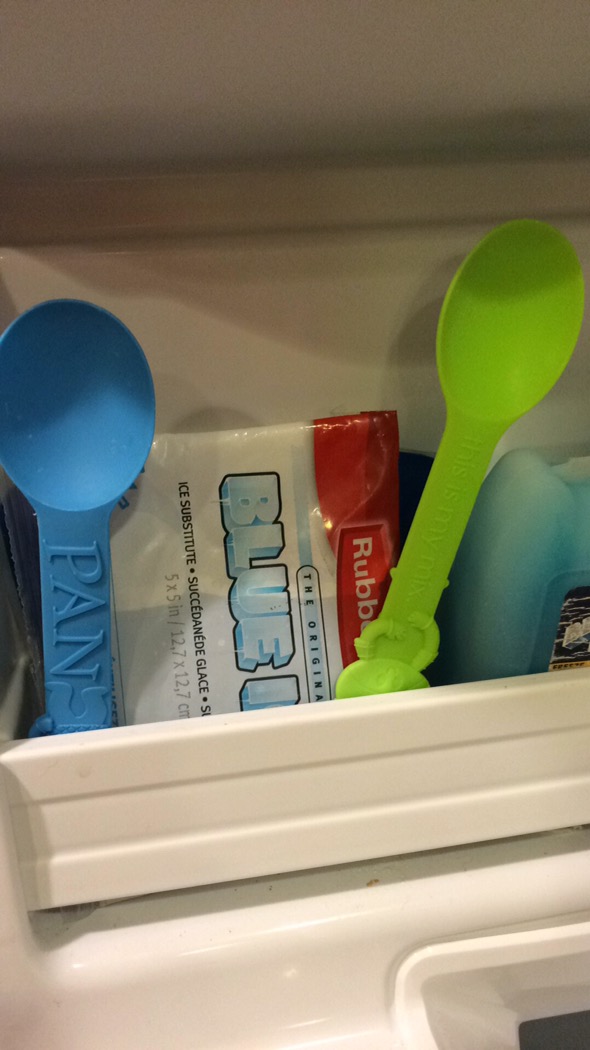
Yesterday my daughter came home with a plan.  “Mommy,” she said, “I learned at school today that to have a snow day we need to put a frozen spoon under our pillows, flush an ice cube and wear our pajamas upside down.”  With that pronouncement she went to the cutlery drawer to pick out which spoon she wanted to go into the freezer, and I followed after her to get clarification that “upside down” meant “inside out.”  I wasn’t sure how we were going to pull off upside down pajamas.

Not wanting to mess with a potential snow day, I had her freeze a spoon for me and my husband.   I dutifully flushed an ice cube and then let her flush one.  We both wore our pajamas inside out, but couldn’t convince Mr. Afthead to turn his boxers inside out.  A frozen spoon went under her pillow, under my pillow, and was snuck under Mr. Afthead’s pillow.  He didn’t really want a snow day, or at least that was his justification for not playing along.

I posted the recipe for snow day on Facebook, and was inundated by replies from my limited list of friends that their kids had also proclaimed the same, or similar snow day procedures.  One mom worried because her spoons weren’t frozen, but the power of the elementary school crowed could not be overwhelmed by a single family’s inability to freeze their spoons or a dad’s unwillingness to wear nontraditional oriented pajamas.

The 5:30 oh-my-God-someone-has-died automated phone call from the school district and the foot of snow told us that our careful plans had worked!  Do not question the power of the snow day meme when implemented en masse.

Being the best you

It’s the hallmark of every performance review.  Your boss tells you everything you are doing great and then ends with the motivational “You really need to work on” laundry lists of faults, problem areas, and things that annoy you about him/her.  Some of the feedback is really helpful, and some isn’t.

As a manager, I subscribe to the StrengthsFinder management philosophy.  In a nutshell this means that everyone is really good at certain things and as a team we should spend our time and energy making sure that everyone is doing stuff they are really good at.  If we find we need a skill that no one is good at, we should hire someone who is really good at that skill and offload that work to them rather than making someone magically change into a new and different human being.

Now, the strengths in StrengthsFinder aren’t normal work things.  They are themes that exist at work and in life and help you understand what you are good at in the big picture.  Mine, in my own words, are:

Ideation – the ability to tie different things together in new and innovative ideas

Responsibility – the ability to own tasks and problems and bring them to resolution

Maximizer – the ability to make the most out of people

Relator – the ability to build relationships with the people around me so I can really understand them and work with them

Strategic – the ability to think about the big picture and move a team together in a common direction

Note I do not have all 34 of the strengths, only five.  I am not great at everything.  For example I do not have Woo (“Winning others over”.) Woos like to talk to strangers; I DO NOT HAVE WOO.  However, there are times in life when I really need to talk to strangers.  I need to network with new people and not seem like I am not being tortured, because cringing makes new people uncomfortable.  As a traditional manager I would think, “I really need to work on being more comfortable talking to strangers, because if I don’t change it’s going to hamper my career going forward.”  As a strength based manager I say, “Susie really likes talking to strangers.  Maybe I can offload this part of the project to her, or take her with me to meetings to help with the networking.”

Strength based management isn’t about making you better at what you hate, it’s about teaching everyone that different people like and excel at different things.  Let me state that another way: there really are people who enjoy doing the stuff you hate and you should find those people and hang out with them and work together.  Also, they  might hate doing things you love, so you’ll get to do more things you enjoy.  You will be happy and more successful and they will be happy and more successful.

I’ve found StrengthsFinder useful in my home life too.  It was mind blowing when I realized that many of the conflicts between me and Mr. Afthead happened because we are both Responsibility people.  While you might think that means every problem in our home gets an owner and resolution you would be wrong.  I see an issue and take responsibility for it; I own it and will see it through to conclusion.  However, my husband sees the same problem takes responsibility for it, owns it and sees it through to conclusion.  Conflict occurs as we both try to solve one problem, each in our own way. Because of StrengthsFinder we see these problems coming and can circumvent anger…sometimes.

The last thing I love about Strengthsfinder is that is relatively cheap to get started.  For $18.35 on Amazon you can get the book, which includes a code to take the online test.  The book will lay all 34 of the strengths and the test will tell you which 5 are yours.  It will also tell you how your strengths interact with each other.  Knowing and understanding you own strengths is incredibly powerful.  Then, if you can get those around you to take the same test, you can start to find your partners.  If you can’t get anyone to take the test, you can use the book to try to derive the abilities of those around you and start to make partnerships that way.

As a person who isn’t always self-aware or people aware, this has really helped me.  It’s helped me realize that everyone is good at different things.  It’s helped me really understand where I thrive, and it’s given me a way to understand weaknesses in our team and solve them productively.  I’m not affiliated with the Gallup folks who created this idea, but I am a fan of their work.


Final Thoughts

If you have the means, go get a copy of StrengthsFinder 2.0.  If you want to learn more before you invest, get a copy from the library and read about the Strength Themes.  Note that the one-time-use code will probably be used already in the library book, so if you like the idea you’ll need to make an investment.  Once you take the test you’ll learn what you are great at and what makes you special as a person.  It will also provide you with suggestions for strengths you can partner with.  Start finding those people.

If you really love the concept, like I did, recommend to your manager that they get the Strengths Based Leadership book.  This will help them understand their strengths as a leader and introduce them to the concept of team based strengths:  everyone needs partners to be successful.  Then maybe they’ll get everyone you work with to take the test.  (That’s what I did.)

If you love the concept, but your manager is a jerk, you can still tell colleagues about it or family members.  Then you get to have fun conversations about what others are good at and how they can maximize their own strengths.  No one dislikes talking about what makes them special and different, trust me.

I highly recommend you go find out what makes you special and different, if you don’t know already.  You’ll be able to use that knowledge to build opportunities for yourself that will make you happy and successful.  It’s like magic!

How do I know my genre?!?!

So, a L-O-N-G time ago I posted about the novel I’d finished writing, and had this super awesome list of things I was going to do next.  Then life happened and the list items didn’t all ticked off.  Sometimes I find I need a deadline or a reason to motivate me, so I signed up for a Writer’s Digest Bootcamp to have my first ten pages and query letter critiqued by an agent.

The first thing I learned, that got my heart pounding, was that I had to define my genre.   This was #6 on my list from August.   Even back then I knew I couldn’t pick an agent until I completed this step, because agents specialize in certain genres, and I needed to pick an agent to review the first 10 pages of my novel and my query letter.  Oh no.

I’d heard lots of advice.  Figure out the genre of comparable novels and that will tell you your genre.  Okay, I’ve got a list of comparable novels, but my google searches of “Dark Tower genre” led to no useful results.  I looked on Amazon, but there are so many words on an Amazon page that I wasn’t sure what the genre was, because there was nothing that said “Hey newbie writer, here’s the genre!”

However, after searching like crazy, and even buying an awesome poster from Pop Chart Lab on “A Plotting of Fiction Genres” and hanging it up in my study – looking gorgeous but not helpful – I finally found a resource that makes sense to me: The Book Country Genre Map.  This is an amazing, AMAZING site.  I was quickly able to drill down into both Science Fiction and Fantasy and see how each genre was defined and what subgenres exist.  I’ve pegged my novel as a contemporary fantasy subgenre (I think), but definitely in the genre of fantasy.  Now, I may be totally wrong, but at least now I have the vocabulary I need so when I look at the Amazon site and see  Books > Science Fiction & Fantasy > Fantasy > Epic under The Gunslinger, by Stephen King, I can translate it to Genre: Epic Fantasy.  Sadly, I put this as one of my comparable titles, but I’m not epic fantasy.  Thankfully this boot camp is a chance for me to make mistakes and learn from them so when I go to query agents with a completed novel I’ll know better.

I have to admit, I’m loving this aspect of moving my book to the next stage.  There is so much about this publishing world that I don’t know and it’s fascinating learning the lingo, the rules and the processes.  It’s so different than my day job, but there are really interesting parallels.

Item #6?  Done, and will help me finish #5, #7, and #8!  Now I really need to get motivated to make a big push on the second draft so I can have someone other than me read this thing!


Write a Cover Letter

Let’s say you ready  my second post in my Management Monday series, and decided that you really need to find a new job.  Congratulations.  Now dust off that resume, get it up to date, and find some jobs to apply to.  However, before you hit that submit button or lick that envelope, I would like to strongly urge you to write a cover letter. Let me state that another way. Do not bother applying for a job if you don’t want to write a cover letter. If you don’t want to take the time to explain how your skills, life, and time on this Earth are applicable to the job you are applying for then why should I, the hiring manager, take the time to read through your resume to understand?  The cover letter is a gift bestowed upon you by the job seeking gods to give you a chance to wow your future manager for the first time.  It’s your chance to make an impression, show some personality, and make me want to read your resume. (Which had better be no more than two pages or one page front and back and ideally, I really only want to read one page. Again, if you can’t tell me what’s important in your life, why should I try to do that for you by parsing through 10 pages of detailed job history?  But I digress…)

Okay, I know this all sounds harsh, but really, a hiring manager can get hundreds of resumes for one position. It’s a lot of work to read through those resumes and if you don’t make it easy you are likely to get thrown in the reject pile. Maybe the job you are applying for doesn’t have a crazy lady like me who is nutso about cover letters. Right, so then you don’t need to write one, but how do you know? Unless the process expressly forbids writing a cover letter why would you skip the opportunity to showcase what’s amazing about you?

If I have convinced you that a cover letter is important, let me now impress upon you that what you put in your cover letter is also important.  Prove to me that you’ve read my position write up. I’ve spent hours on it, and it’s been reviewed by my boss and my boss’s boss. These are our words about what you are going to be doing in this job. Show us that you understand the job, that you can translate our description to your experience. If you are missing experience, use this as an opportunity to tell us why you’d love to grow in that area.

You want extra double bonus points? Go to Google. Search our website. See if you can figure out what we do. Find some recent press releases or news that you think might be applicable to the group you will be joining at this new company. Even if you guess wrong and talk about some other group’s work you’ll get points for trying, and it gives them a good reason to bring you in for an interview. They will want to correct you, and tell you what their group does and why it’s better or different than the group you mentioned.

This all requires work, and it feels risky, but I promise you that putting that little bit of extra work in is worth it if you really want the job.  Yes, I know if you are applying to ten jobs you have to do this ten times (and I really suggest you also tailor your resume ten times, but again, I digress) but think about it as your first chance to show off to your new employer.  When you work there you don’t want them to think of you as just another person, you want them to think you are special, right?  So make yourself special from the beginning.

One last thing. If you are lucky enough to get an interview, send a thank you note afterwards. Get someone’s contact information and send it electronically, or for extra bonus points, hand write thank yous to the interview team. The personal touches really make a difference.


References?

I really like Don’t Send A Resume by Jeffrey J. Fox as a reference for finding for a new job.


Knitting Knews

I know you are all dying to know, “But Johanna, what’s going on with your knitting?”  Well let me tell you, the thrummed slipper is coming along magnificently.  The sole of the first one is done.  The outside, or bottom is the brown side with the yellow v’s.  The inside, where the bottom of my foot will go, is the side with the fuzzy yellow caterpillar looking thrums.  Next I just need to knit up the foot and then add more thrums to the top of the slipper.  I’m expecting coziness for one foot soon.  Sadly, since I’m on the road, I had to abandon my slippers for a bit.  Thrums are cool, but not travel friendly.  I’m hopeful that with a Sunday of football ahead of me I can get the first one done.  Then we’ll see if I make the second one next, or make a pair for my demanding daughter first.


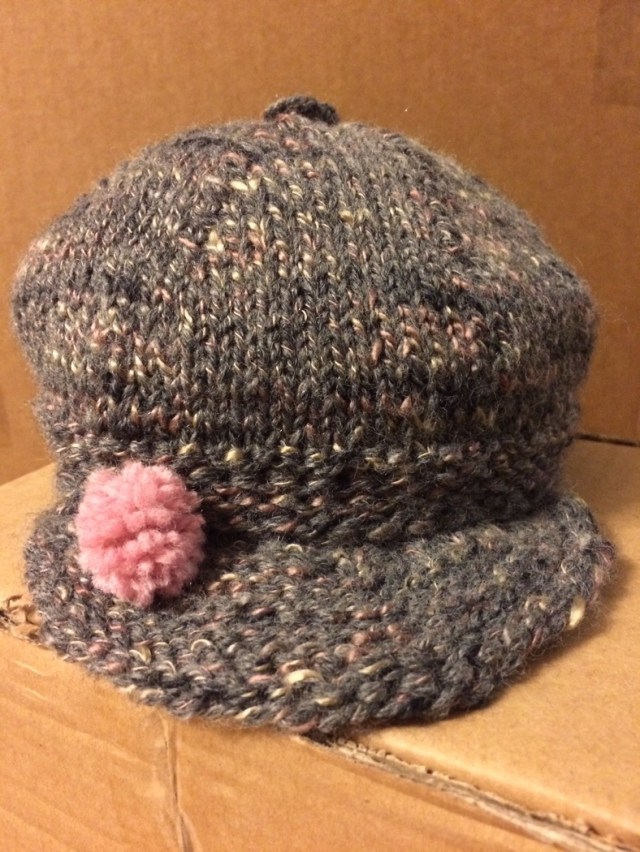
One more update on the hat I knit for my friends with the sick little girl.  I heard back from them.  They love the hat and it fits perfectly.  I was so worried, but then a friend at work said, “Of course it was going to fit.  It had to fit.”

img_1210

She’s right.  Sometimes fate, or God, or the powers that be make sure that things work out.  The hat had to fit.  It has been called, “The coolest hat ever” by several admirers.  The pom pom is also adored.  This makes my heart happy.

There, feel better?  You are all up to date on the knitting news…except, there may be another hat in the works.  This time for me!

Travel Day Stories

Today was a travel day.  I love traveling.  I love watching people in airports.  I love the weird interpersonal situations that happen when way too many people are crammed in way too small seats way too close together.  For whatever reason, today was a day of really happy, positive, kinda weird stories.

The Girl Band

One TSA line over is a girl.  She’s wearing a top hat with a huge fake orange flower and a wide fabric band.  She has on shiny maroon Doc Martins, and I marvel at how small her ankles are in those boots.  No one has small ankles in Doc Martins, but she has tiny feet too, so maybe that’s the reason.  She’s a slender girl who looks like a teenager to my aging eyes, so she’s probably twenty-five.  She has close cropped hair, beautiful posture and everything about her is alive.  She has a guitar case slung over her shoulder and a banjo case at her feet.  I wonder how she’s going to get them both on a plane.  Once, I sat next to a man who bought a seat for his guitar, so maybe she’s doing that.

Then I notice her friends.  There are three girls, not just one, and they all have that same alive, short-hair, good posture look.  She isn’t a musician, they are a band, and just the three of them are traveling.  This means they probably are in their twenties, and not the teenagers I originally thought.  The tallest one in the blue coat is comparing her jacket to her friend’s jacket and asking the hatted one, “It’s blue, right?”

The friend says, “It’s not blue.” The hatted one agrees.

Suddenly, the not-blue jacketed one notices me watching their scene and she shouts across at me, “What color is this?”

I am delighted to be included in this group and I shout back, “Not blue.”

She tilts her head, “Not blue?  Then what color is it?”

“Charcoal.” I call back.

“Charcoal!” The hatted one says, and they are back in their own world.  I try to engage them with the start of a question about the color of my own orange-red jacket, but I am forgotten.  For a moment I wish I’d worn my own not-blue jacket.  Maybe we would have talked longer, and I could have asked my own questions.  Where are you going?  How will you get a banjo and a guitar on the plane?  Did you make that hat?  What’s the name of your band.

Alas, they are on to comparing the color of their pants.  Maroon?

Cash on the Plane

“Only credit cards.  Credit cards only.” The flight attendant repeats row after row.  Obediently the passengers put away their bills and hand over plastic.  The routine is interrupted by the man in the middle seat in front of me.  I can see him through the break between the seats, and his long hair and music mixing app on his computer make it obvious he is no traditional airline commuter.  He challenges the flight attendant.

“What if I pay you double the price, can I pay cash?”

The exhausted, overworked, low-budget airline attendant says, “No.  Credit only.”

The music mixer decides to perform.  He raises his voice, “Will anyone, anyone in this airplane pay for my snack, and I will pay you in cash.”

I roll my eyes at his bravado, and am shocked to hear a female voice say, “I will.”

Some lady two rows in front of me offers to pay.  There is a complicated back and forth with her snack mix, her gin and tonic, his craft beer – his word – and then his gin and tonic, in addition to the craft beer.  Snacks are passed out.  Drinks are handed out, handed back, and then handed out again in different formation.  The guy next to the music mixer asks several times, “I’d like a water when you get a chance.”  The music mixer hands his cash to the woman, and it’s too much money.

He insists, “As a thank you for your purchase.”

The attendant moves on, after giving the guy his water, and the water man starts quizzing the music mixer about his work: “Have you ever heard of Glenn Frey?”  The music mixer starts starts his beer – he doesn’t like it, must not be crafty enough – and says that he has never heard of Glenn Frey.  So, the water guy starts talking the lyrics of Hotel California and I wonder if the cash the music mixer gave the lady is real, or if somehow the music mixer is also a counterfeiter.  I also wonder if the music mixer really doesn’t know Glenn Frey or is just too cool to admit that he loves Hotel California.

Airplane Dad

I’m sitting in the terminal waiting to start a conference call.  Nestled back in molded airport chairs under the escalator I hear it before I see it.  The sound of a plane taking off. No, the sound a person makes when sounding like a plane taking off.  Into my vision bursts a paunchy dad with a child bigger than an infant but smaller than a toddler in his arms.  He’s running down the terminal holding his child in the air making airplane noises and they are both laughing and totally unaware that it is inappropriate for grown men to run in an airplane terminal making airplane noises.  Unbeknownst to them, they also make a third person happy, me, who loves inappropriate parental/child joy.

Safety Conscious Beggar

The homeless man mutters at every person who passes in front of him.  It’s snowing and he’s standing underneath the overhang of the building where the pavement is just wet.  He shakes his cup at everyone, and no one give him attention or money.  I hear him when I’ve already passed.

“Be careful.  It’s slick.”

I wish it wasn’t snowing.  I would have given him a dollar, but he’s right, it’s slick, so I don’t stop.

It isn’t just about payday

I graduated from college almost 20 years ago with my degree in Chemical Engineering. Most of the open jobs were with oil companies drilling on the north shore of Alaska.  After having spent 3 years interning in renewable energy I didn’t want to go rape and pillage the Alaskan wilderness.  The other options were limited.  Caterpillar was hiring in Peoria, IL but that interview started with a large man with a large hat scanning my 22 year old self and slowly asking, “So little lady, why would…YOU…want to come work for Caterpillar?”  I didn’t get a second interview.  The other opportunity for me was to go work in the hugely growing world of computer programming.  I’d taken a few programming courses, I liked them, and I was offered a job with a huge consulting firm in Chicago.   They said I was smart and they would train me to code.  I’d be surrounded by people my own age.  It seemed like a great opportunity, but why?

Your first real job offer.  Do you remember it?  Did you spend a lot of time figuring out if your job was a good fit?  Did you wonder if the corporate culture fit your needs?  I didn’t, or I didn’t evaluate my opportunities consciously beyond “How much do they pay?”  Twenty years later, I know that for me, that’s one of the last questions I need to ask myself.

Last year I was invited to a women’s networking event where the featured speaker was going to present on “Women entering the C-suite.”  The presenter was a woman, 5 years younger than me, who was a career coach that charged between $15k – $45k per person to coach women into finding C level positions.  You know, for those of us dying to become a CIO, CFO, CEO, or COO.  Personally, I have no ambitions in this direction but I have friends who do, and there was free food and wine, so I went and what I learned was eye opening.

This woman, who had to make 3 times my salary, explained that in order to reach your career goals, you first have to understand what you want out of your career.  She then challenged us to make a list of things that we want out of a job.  I have no real notes from this discussion, because I have since lost the notes I took in my daughter’s notebook with her colored pencil, but I have a strong recollection of our list.  It looked like this:

  1. Money
  2. Flexibility
  3. Benefits
  4. Friends
  5. Learning opportunities
  6. The mission
  7. Mentors
  8. Potential for advancement
  9. Leadership opportunities

She then told us to pick the top three things we wanted out of a job and shared her choices.  She picked money, potential for advancement, and leadership opportunities.  She went on to tell us that she owned her own company because she wanted to be the leader of whatever she did, and her goal was to make enough money so that she could have three homes when she retired at 45: one in Aspen, one near her family, and one on the ocean.  She wanted to be able to use these homes to host her family and live out her days in luxury.  Those were her C-Suite career path values.

If the notepad with googly eyes wasn’t enough of a clue that I’m not destined for CTO, her list solidified my lack of interest.  Mine said: mission, flexibility, and friends.  I want a job where I can go every day and know that what I’m doing is making a difference in the world.  I need a job where I can go to my daughter’s Halloween party, or coach her soccer team.  I want to go to work everyday with people I really care about and who care about me.  Don’t tell my boss, but money and benefits aren’t even on the list.  Of course, I want to make enough money to support my family and keep our house, but our needs are pretty simple.  I don’t want three homes.  I don’t want to retire at 45.  In fact, I dream of a life where I can work into my 60s or 70s, but be able to take sabbaticals have opportunities to pursue other passions mid-career.

Okay, so what’s the point of all of this?  Well I’m a manager, and I have conversations with people who say things like:

“I need opportunities for advancement.   There is nowhere to go in this organization.”

“You don’t respect my skills here.  I am a great software developer, but I can’t move up without content knowledge.”

“It’s your fault that I don’t have enough work to do.  That’s a manager’s job.”

“I’m an expert.  I don’t need to change.”

“Just tell me what to do.”

The truth of the matter is that those are all valid opinions and statements and these people are really unhappy.  The other truth is that those complaints cannot be resolved at my company.  For example, in my job family there are six levels and I was hired at the third one.  In twelve years I’ve received one promotion.  I have grown and developed, but unless I want to get a PhD, I only have one more promotion I’ll ever get. The “I need opportunities for advancement” person is doomed for disappointment if they don’t leave. We aren’t going to create new promotion levels.  Sometimes you can’t make your needs match what your company provides.

The flip side are the people who say:

“I never want to work anywhere but here.”

“I don’t jump out of bed excited to come to work everyday, but I’m always happy to be here.”

“I really appreciate all the opportunities here.”

“This really is an amazing place.”

Same job, just different people.  What I find fascinating about management is that every person is different, and what is stifling to one person is invigorating to someone else.  The job isn’t bad and the person isn’t bad, there is just a mismatch.  Of course it’s hard to leave a job, but you spend at least 8 hours a day at work.  If you can, try to find somewhere that can give you what you need.   If you can’t leave at least there is some solace in understanding why you are unhappy.


Final Thoughts

List out your three must haves from your job and think about if your needs are being met. Then think about if it’s possible to make your needs met given the corporate culture.  If you don’t know how to answer that question, find someone you trust who you think might know and ask them.  If you can’t make your needs align, do you get enough out of the job to stay without being completely disgruntled, or is it time to find another job?

If it’s time to find another job make sure you are going somewhere that can meet your needs.  As a manager, I try to be very upfront when I hire people about the culture of our team and our organization.  I explain what success looks like and what we expect from teammates.  I am honest about what’s amazing and what sucks about the job.  I don’t want to hire someone who will hate their job, and no one wants to work at a job that they hate.  If you interview for a new job and don’t get that kind of feedback ask.

As a worker, I try to evaluate my values from time to time and make sure they align with where I see my company going.  If I do find my needs are no longer being met, I’m realistic about expecting wholesale changes to my workplace to make me happy.  For example, I hate bureaucracy, but my current position is awash in it.  However, I can take a step back and realize that my three key values are supported by my workplace and for now I can overlook the things that suck.  It’s empowering to know that you are putting up with something for a good reason.


Thoughts and comments on the new Monday Management posts are appreciated!