In July 2018, almost eight years ago, I finished writing the first final draft of one of my favorite stories, Bumblecat. I submit it to a journal and was rejected three months later. The timing worked out so that I could then submit to one of my favorite publications, Glimmer Train. They had a call out for their final issue, and I dreamed of being included. They also rejected me. Undaunted, I sent it to an online publication where I got my first ever negative rejection. I had paid for feedback from the staff reader. That was a mistake.
If this is sci-fi, it deosn’t pass the test of plausible science. If it’s an allegory, I’m not sure what of.
The opinion of this single person, who deosn’t even consider my feedback worthy of spellcheck and ends sentences with prepositions, was enough to make me quit. I mothballed Bumblecat.
Six years later, I was a different writer. I had three publications under my belt. I was a different person. My ten-year-old had grown old enough to drive. I had a longer view of motherhood. I had just ended my 20-year career supporting the Federal Government. My life experience meant I knew behind the scenes workings of scientific grants and technology commercialization. I knew how different facets of intelligence — scientific versus political — can conflict. I knew that being smart and being successful were not the same. I knew the conflicts between ambition and altruism. I was in an altogether better life place to tell the story of Bumblecat.
My first task in 2024, as a fulltime writer, was to rewrite Bumblecat, and develop a plan. I would submit to all the big magazines: the ones that won awards. An acceptance there would jumpstart my writing journey. Bumblecat got rejected six times in four months.
While “Bumblecat” isn’t quite right for us, many on our staff were impressed with your writing, and your submission merited additional consideration before we reached our final decision
I found this to be such a unique story!
I agreed with these rejections. It was good writing and a unique story, but why did everyone say it wasn’t a fit? Having exhausted my list of elite publications, I took the summer off from submitting.
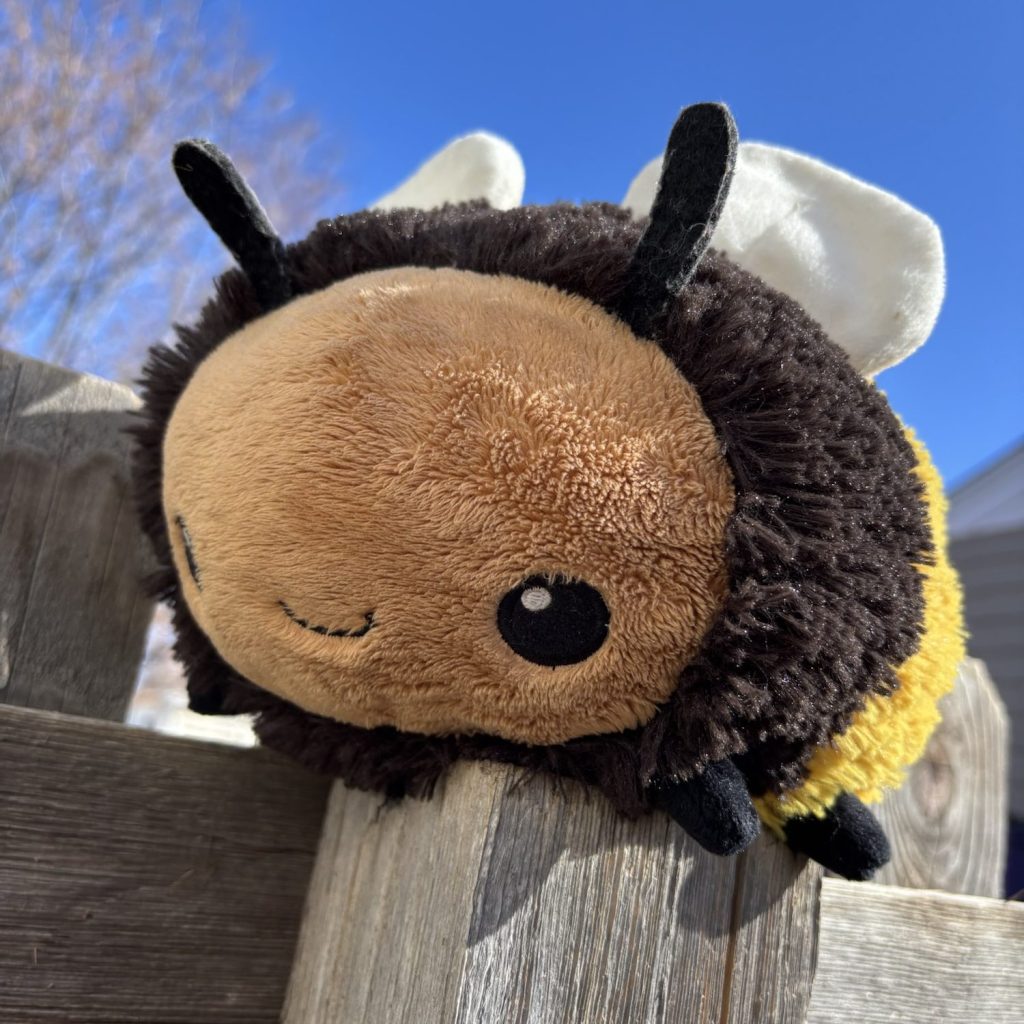
My daughter is the muse for Bumblecat. I have this big puffy stuffed animal bumblebee. When she was little, she and I were lounging in my bed and one of us, I don’t know who, came up with this idea that my huge bee was a bumblecat. The story’s opening scene is an homage to that goofy mother/daughter chat.
During my summer submission hiatus, my family traveled the East Coast and Midwest searching for the perfect colleges and universities for my now seventeen-year-old kiddo to apply. Where would she go for her next life adventure? We looked at elite colleges, and they all felt icky. We looked at big state colleges, and some of them felt good, but not all of them. We looked at small business schools, and some of them felt good too. We made her application list not based on prestige, but based on where she thought she would fit. My daughter continues to teach me.
My first fiction publication was with Luna Station Quarterly (LSQ). They published Grork Dentist in 2019. I’ve been a loyal subscriber ever since. I love that they publish both online and on paper. I love that they focus on women writers. I’ve lurked in the editor’s Patreon long enough to be impressed with not just the stories Jennifer Lyn Parsons publishes, but how she’s handled the advent of AI, how she protects her writers, protects her own work, and has curated her publication. Maybe, I thought, she might appreciate some of the quirkier aspects of Bumblecat. My story is about a working mom balancing her family and her dreams while battling the establishment. Distilled down it’s about women experiencing the female condition. Could it be a perfect fit for LSQ? When they opened for submissions, I sent in my story. I got the best response.
The publication is available in a variety of electronic formats and in print. Be sure to check out the beautiful artwork by Sve Yurchenko, a Ukrainian artist, on the cover. I love it. It’s such a great match for Bumblecat. Read a few of the stories. Let me know which ones you love. I hope mine is one of them.
January 2021 things were still strange in my world. I was working at home. My daughter’s school delayed their winter start, trying to figure out executing in-person and remote school, so we were both home. She was in sixth grade.
I’m a bit of a political junkie and January 6th, 2021 provided an excellent opportunity to witness something I’d never seen before. The counting of the electoral college votes. I had a light day of meetings and lots of busy work, so I decided to sit with my computer and kiddo to watch the process as an impromptu civics lesson.
MSNBC coverage of the simple process that was supposed to happen to certify the 2020 election
I knew shenanigans were planned for the floor. Republicans were going to protest the count and try to avoid certifying the results. A potentially additional lesson on how the foundation of our government, the peaceful transition of power, would be tested.
I can’t believe how badly we bombed our national test. I remember flashes from watching the news broadcast with my daughter. I remember the interns, young women in suits, protecting the electoral college votes and whisking them away from the mob storming the capital. In my memory the votes were in wooden chests that invoked the history and importance of their contents. My memory is not wrong. I remember watching a gurney rolled out of the capital building and my daughter asking me, “Did someone die?” With the sheet pulled up over the body, I could only respond, “I think so.” My memory is not wrong. Windows were broken in our capitol and men wearing dead animals on their heads walked the floor of the House and Senate. As a lover of dystopian novels, reality stretched the bounds of my imagination that day while I watched a mob vandalize and disrespect our capitol, our country, and our system of government. I watched start to finish. It was not a “day of love” and those people were not “patriots”.
Image of my television showing the January 6th riot. One man holds Trump flags while another holds a Confederate flag in the United States Capitol.
It was a civics lesson that would continue. I remember the day last year when my daughter came home from her AP US History class ebullient about the importance of the peaceful transfer of power. Her knowledge had finally caught up with her experiences and she went on and on about how January 6th was the antithesis of the principles that make our country special. In two years she’ll cast her first ballot, and she can’t wait. Already she’s a highly informed voter.
My first election in 1992 I was a single issue voter. Straight democrat to protect abortion rights. When I was in my late teens and twenties unwanted pregnancies weren’t about a late term abortions to save the life of the mother. They weren’t about fetal abnormalities or ectopic pregnancies. They were about boyfriends who already broke up with you, and you didn’t want their baby. They were about being on the precipice of starting your own life and knowing your newly hatched dreams wouldn’t be possible with a child. They were about your parents, who wouldn’t understand. They were about getting loans from your friends for the $300 procedure, because if you couldn’t afford an abortion how were you going to afford a kid? They were about not wanting to be a mother and not wanting to join your life to a partner. That precious potential of young women was the most important thing in my world, and I voted to protect myself and my friends.
Now that protection is gone. Thank goodness pharmaceutical abortions were developed since my first election in 1992. When Dobbs took away our constitutional right I immediately ordered abortion medication. Not because I was pregnant. Not because anyone I knew was pregnant. But because I have had friends show up on my doorstep, needing help, and I wanted to make sure that help was available in the future. While mine and other woman’s rights to bodily autonomy are protected in my state, and hopefully will soon be in our constitution, I don’t trust that my country will continue to protect my right to choice.
My memory is not wrong. In high school I was told that abortion rights were protected by Roe and would never go away. Now I am told that January 6th wasn’t a riot incited by a Trump supporting mob. Trump’s Supreme Court nominees have revoked my rights as a human being. Trump’s followers desecrated our capitol and the ideals of our country.
I want to be able to remember how in 2024, we rejected violence and authoritarian control. I want to remember sitting next to my daughter and watching as we elect our first woman president. I want to remember what it’s like to have a leader who has lived in a female body with female vulnerabilities for 60 years and how that changed our country for the better. I want us to remember how to celebrate our differences and learn from each other again. I’m ready to remember the first moments of a Harris presidency.
I sense a change coming. At almost fifty years, for the first time, my life is about to get smaller. I’m not sure how I feel about it. Part of me is exhausted managing 17 people at work, boostering sports at the high school, parenting one child, managing one household, meeting with my writing group, trying to keep my body from falling apart, keeping a semblance of friendships, and contributing to two extended families. My life is always full.
The opportunities to do more are endless. I could be a DECA judge at the high school or volunteer for the PTA; apply to an executive MBA or CTO program; run the women’s network at work. They need me, while my heart longs to see my parents more or have a leisurely meal with friends.
And there are so many people. Work people, school people, sports people, family people, friend people, writing people, and neighbor people. People I want to see and people who want to see me. People I am obligated to see and people who think I’m obligated to see them. Annual people like doctors and dentists. Periodic people like sports, writing, and camping friends. I could have coffee and lunch every day and still feel like I’m missing out on relationship connections. With every new hire, new project, new school, new activity, or new interest my rolodex grows. (A dated metaphor, but some of you know what I’m talking about.)
The first end is less then three months away. My role as driver has a deadline. There is no indication that my daughter will do anything but pass her test, get her license, and never need me to take her anywhere ever again. Okay, I’m exaggerating, but this feels like the first official life contraction. Sure other parenting tasks end, but for the most part they are replaced. I don’t have to change diapers or mash up food anymore, but now I learn the nuances of lip gloss versus lip balm and make pancakes for sleepovers. But driving is a task that grows as kids get older. They have more activities that are farther away and take longer. More friends and more opportunities to leave the house. It’s not all a burden, because the parental time in the car is special. The car is a safe zone where you find out secrets, hopes, and dreams. I won’t have that view into my kid’s life anymore.
Driving also makes my life bigger. I made friends with parents hanging out on the sidelines when my daughter was little. I found new trails to walk as her sports took her all over the state. Now, I wave to my kid’s friends when I do the permit driver switch at school. I’m a basketball booster parent because the coach saw me after practice, and we got to talk for a minute. Suddenly those relationships, experiences and interactions will be gone – abdicated to my kiddo to maintain.
I love being a parent, and recognize this is the beginning of the great metamorphosis from hands on to hands off. From loving a child to loving an adult. Not far out are pre-college camps, which she’ll do solo. My best travel buddy’s first travels alone. Then college. That’s the big one. In two and a half years I’ll go from living as a household of three to a household of two. No games to attend. No parent teacher conferences. No back to school nights. Suddenly priorities in my life will go back to being determined by me – not a school schedule or a sports schedule.
What will I do with myself? I used to do this cool thing called working out, and it made my body and mind feel amazing. But I usually did that with friends, and how do I find friends who run if I’m not going to soccer practice and running stupid one-mile loops on the concrete path around the soccer fields? I like watching sporting events, but how does that feel when you aren’t surrounded by the parents and friends of the kids playing? What will provide the rhythm to my days and years? Where will I meet new people? And do I really have to just hang out with my husband every day, all day?
Honestly, I’m ready for a little space. Time to return to things I love. My writing has suffered. I miss my close relationships. I long for interactions that don’t have to fit into a smidge of time scraped out between activities. Maybe I’ll actually be able to respond to work emails again? (Probably not.) Maybe I’ll be able to nurture friendships who have gone stale, or build stronger friendships with people whose lives don’t quite match my rhythms now? I long for complex foods with spices and heat that fill the house with smells my daughter despises.
Where does it end? Friends are retiring and I see how hard it is to maintain relationships between working and retired people. Your lives become different, so I’ll keep losing friends as they leave the workforce, but will we reconnect when I retire? My parent’s friends keep dying and their world gets smaller with every loss. Is this part of the natural cycle of life? Your world expands to a peak of fullness beyond comfort and joy beyond maintainability and then contracts back down to a tiny family unit then a lonely end? What happens on the other side of parenting, of work, of health?
I’m hoping there is a time of contentment between now and death. A time to be thoughtful. A time to breathe and focus on the things and people I love, including myself. A time when I do what I do because it’s important and not urgent. A chance to want to do things and no longer have to do things. I hold this hope close to offset the fear as the losses loom. I am ready for some time alone, but I am not ready to be lonely.
It feels like a perfect night For breakfast at midnight To fall in love with strangers Ah-ah, ah-ah
22 by Taylor Swift
Full honesty here. I am not a legitimate Swifty. I haven’t been following Taylor Swift since her debut. In fact, I didn’t even notice when Folklore, Evermore or Taylor’s versions of Fearless and Red came out during the pandemic. But something was different when she released Midnights. What changed? I had a teenage daughter whose casual “listening to Taylor Swift in the car” became a shared obsession.
The Eras tour was announced and we attempted to buy tickets, but I didn’t know all the mysterious incantations — verified fan, Capital One card — needed to purchase entry to the concert. But I did know StubHub and Seat Geek, so once the scalpers bought up most of the tickets, I started a fun hobby of watching ticket prices to see if maybe, just maybe, we could go. I checked the price in other cities to see if it was cheaper to fly somewhere, get a hotel, and see Taylor in Pittsburgh or Minneapolis or Detroit. It was not. Every time I looked the prices went up past reasonable to extravagant to embarrassing.
My fatal flaw was mentioning my ticket searching hobby to my daughter. When her reaction wasn’t “MOM, you are SO lame,” but instead “I’d go to Taylor Swift with you” our fate was sealed and my hobby became a quest. I compared resale sites, contrasted seat locations and venues and finally picked out seats, only to have my credit card reject what was obviously a purchase outside of my normal tendencies. (Okay, I also shouldn’t have tried the transaction after midnight local time – every one of my actions screamed fraud to the banking AI algorithms.)
But after appeasing the credit card overlords, I dropped more money than I will ever admit on two tickets, a few weeks before my daughter’s fifteenth birthday. I reached out to our family and invited everyone to contribute, so the tickets could be from all of us. This was in no way an attempt to offset our extravagant purchase (because again, they cost a humiliating amount of money) but a way to let everyone be a part of what I hoped would be a keystone memory for my daughter.
Her birthday had the potential to be awful. First school then choir practice then basketball practice; she’d be gone from the house from 7:30 a.m. to 9 p.m. The only break was a planned run to the DMV so she could get her driver’s permit. Luckily, she woke up to a family group text with a picture of the tickets. She’s not a screaming hysterical happy person, especially in the morning, but her birthday was saved and her dedication over the next two months to learn every lyric of every song in the set list showed just how much our gift meant.
The anticipation was amazing. We sang. We made friendship bracelets. I joined Facebook groups. I researched logistics. We bought our clear plastic bag for the stadium. We had something big to look forward too. Something big and ridiculous and fun, just her and me, and that wasn’t something we’d had since March of 2020 when COVID hit.
In the midst of the excitement I let worry creep in. What if we got sick? What if traffic was terrible and we couldn’t get to the stadium? Could we take water? Snacks? What shoes should we wear? Should we stand in line at the merch tent for 12 hours the day before the concert to make sure whe got the perfect memorabilia?
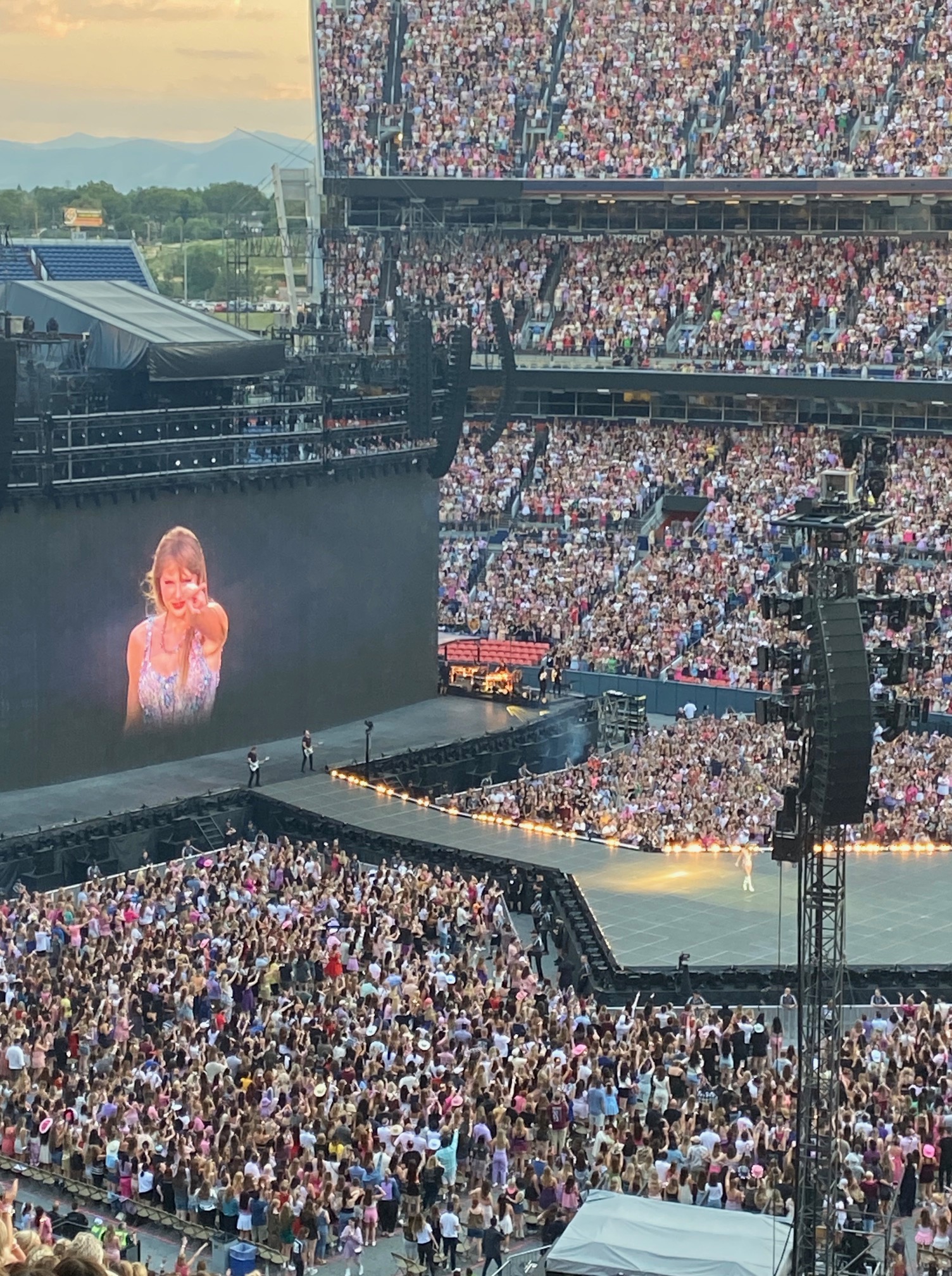
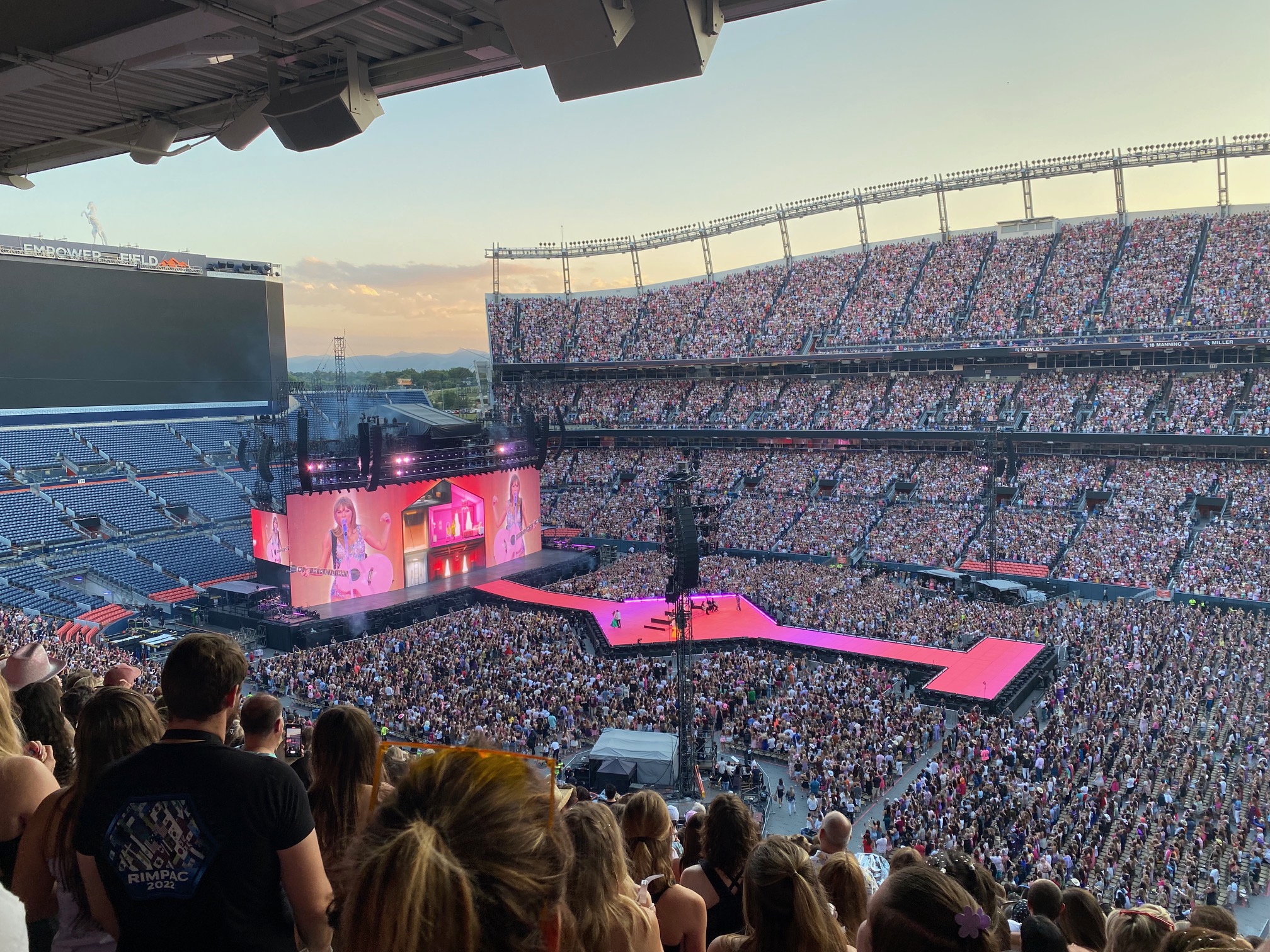
In the end, everything went wrong and everything worked out. My husband was going to drive and pick us up, but when we got near the venue there was a lovely middle school parking lot, so we paid the energetic attendant $25 and my husband took an Uber home. My daughter and I queued at our gate and raced into the stadium, but didn’t immediately get in the merch line, so I had to leave during the concert to get her the coveted quarter zip and Midnights CD (sadly my water bottle was sold out.) Our seats were behind the sound tower, so we couldn’t see anything that matchstick sized Taylor did at center stage, but the screen was huge and we saw the show of our lives. The girls next to us crammed 5 girls into 4 seats and they were lovely and sang their hearts out and traded friendship bracelets with us.
And everything was better than we’d dreamed. Our seats were club level, but we had no idea that meant air conditioning, easy access to food and bathrooms, and our own Taylor Swift Eras backdrop for an epic picture. The opening act, Gracie Abrams, is one of my daughter’s favorite and she played more songs than expected. We were in the last row of our section, so no one ruined the night by shouting the lyrics, singing off key, or spilling anything on us. I got to talk to strangers from Idaho, Utah, and New Mexico and trade bracelets with kids, teens, grown-ups, security guards, concession stand workers, and the guy who sold me merch.
There is so much wrong with this story. First, my ridiculously unfair privilege to spend the amount of money I spent to see a concert that I didn’t deserve to see. Facebook groups were filled with people pleading for tickets who have been fans since the beginning and couldn’t afford $700 for scalped obstructed view seats in the fifth level. Second, it’s disgusting how much StubHub, Seat Geek, and brokers made on Taylor Swift’s art and Ticketmaster’s complacent negligence. Finally, it made me sad that the concession workers – every single one I talked to was a Swifty – were in the venue but couldn’t watch the show, but only listen to the echoes of music through the concourse.
But for me there was so much that felt right after years of being afraid that nothing on this scale would ever feel right again. After my run to the merchandise line, during All Too Well (10 minute version), the logistics were finally complete, and I let myself escape into the joy of the night for a few eras. My daughter and I gasped at the heat of the flames that burned during Bad Blood. We cried together when Back to December was one of our surprise songs. I sang my heart out to the self-deprecating lyrics of Anti-Hero, a glorious anthem to the entire night, “It’s me, hi, I’m the problem, it’s me.” As we left the stadium, we experienced a last magical goodbye as a coveted piece of confetti blew off a woman’s cowboy hat onto the ground in front of us. I reached down and captured one last memento of a perfect night.
We were so fucking careful for six hundred and sixty-two days. We canceled camping trips and school trips for fear of being infected. For fear of infecting others. We quarantined fourteen days before Christmas Eve 2020, just so we could spend a few hours with family without masks. My daughter played soccer games (outdoors), basketball games (indoors), and volleyball matches (indoors) masked. She wore masks at the beginning of cross country meets. My husband and I? We watched games and races apart from other families with our lower faces hidden behind our own masks.
It wasn’t enough. Six hundred and fifty-eight days of being safe and somehow COVID found my daughter. When you are careful, you know exactly when infection occurs, even if you don’t know how. We’d been quarantining after an exposure to a family friend. For five days from 12/26 – 12/31 my daughter didn’t leave the house, but when our New Years Eve plans were canceled because our friend (the same one we were exposed to) was still testing positive, I made a terrible decision, “Let’s just go to the hockey game. No one will be there.” Our first mistake.
My daughter and I put on our masks in the car. They stayed on the entire walk to the game and the entire game. No one was there. We got seats one row up and 6 seats over from the nearest people. People who didn’t wear masks the entire game. The woman in the group coughed several times. I glared at her a lot as if my mommy eyes could stop any germs. At the far end of the row, another group of maskless fans sat farther away, but didn’t show any signs of unhealthiness. Everyone was at least 10 feet away, probably more. No one was behind us to breathe their COVID-y germs down on us. We had masks on: my husband and I KN95s, but my daughter had asked to only wear a surgical mask. Our second mistake.
At intermission, we walked down through the concourse. My daughter had to use the bathroom. Our third mistake. After a moments hesitation, I followed her, deciding I would go too. We both went, but in stalls a distance from each other. We washed hands near masked women, and then went to visit friends at the game who we hadn’t seen in at least six hundred and fifty-eight days. They wore masks. We wore masks. We hugged, but they had COVID recently, so it was a safe hug, but we were near other people. I didn’t note the mask wearing of those strangers because I was so happy to see our friends again. Our fourth mistake.
We spent the rest of the game at our seats. Near the coughing woman. Near the maskless fans. My daughter sat between my husband and I in her less-protective surgical mask. After the game, it was cold, so we wore our masks all the way to the car, keeping our faces warm and avoiding the germs of the unmasked fans walking near us.
My husband and I were boosted, but kids my daughter’s age were not yet approved. The CDC wouldn’t recommend her booster until two days after she tested positive for COVID; six days after she was infected. All the times I’d thought poorly of people who were infected right before they could get vaccinated came back to me in a karmic vengeance. Our fifth mistake? Hard to say, because we hadn’t heard that boosters were imminent, but we did know it had been over six months since her shots, and we knew Omicron was raging. So yes, let’s count that as mistake five.
We went to another hockey game the next day. Same situation, but more fans. The guy next to me was drunk and kept leaning in to talk to me, touch me. We moved seats so I was out of reach. Could my daughter have been infected then? Sure. But neither me, my husband, our friends, or our friends’ unboosted kids got COVID.
On January 2nd my daughter’s phone pinged with a notification that she’d been near someone with COVID on December 31st. I didn’t get the notification, nor did my husband. The only time we were apart was in the bathroom. Could the state notification system have been smart enough to know that my husband and I had better masks than my daughter? Of course not. Right?
Monday, January 3rd, my daughter felt crappy when she woke up. A wicked headache and a bit congested. My husband had just recovered from a bad cold (not COVID, he tested three times). Maybe she caught it? Or perhaps irritation from all the residual particulates in the air from the fires that burned Superior and Louisville days before? She had no cough and no fever, but we tested her for COVID just in case. Negative, so she spent a few hours with my parents (mistake six), came home and went for an unmasked walk outside with a friend (mistake seven), and then went to her club basketball practice (mistake eight). At least she wore a mask at basketball, like always.
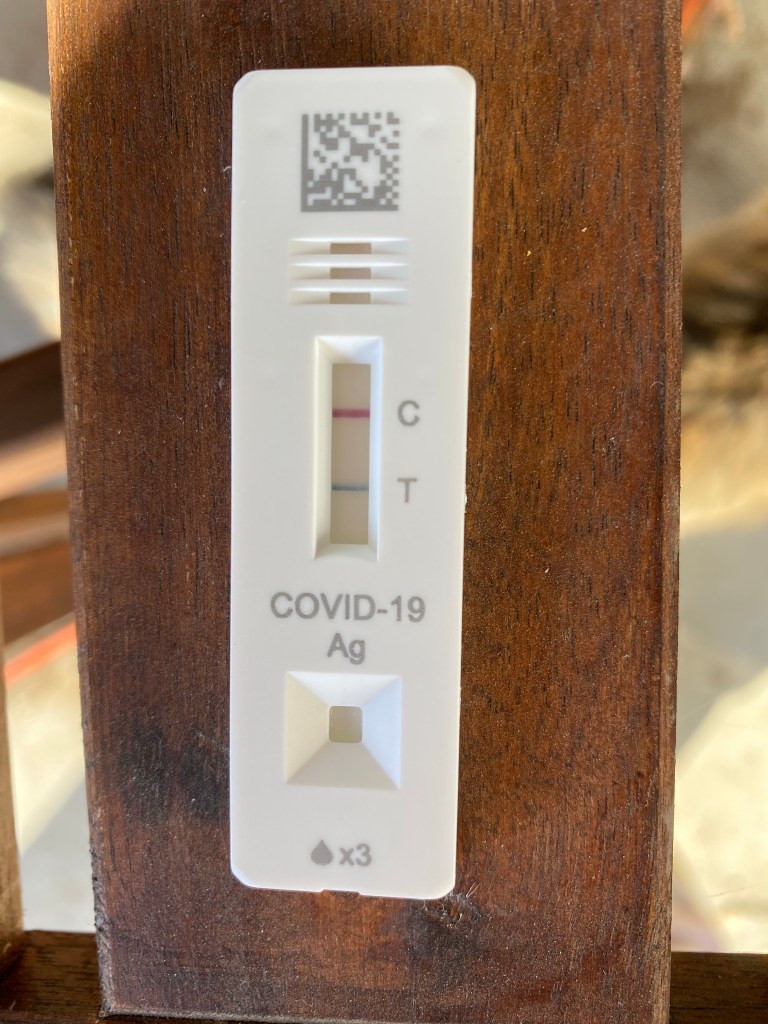
Tuesday she went back to school (mistake nine). Her head still hurt and she didn’t feel great. Of course she’d also slept less than 4 hours. I know because I slept with her. She was anxious about school and finally I gave up and joined her in bed so she could get some rest. All night we shared recycled breath. (mistake ten) “It feels like knives are stabbing my eyes,” she said as she got ready for school. I gave her a Tylenol, because I know how horrible a lack of sleep can make you feel: especially your eyes. Testing crossed my mind, but she was negative the day before and we only had five tests left (mistake eleven). I picked her up from school and she was feeling pretty good. She had an hour to eat a snack and change and then off to her school basketball practice (mistake twelve). After dinner she started feeling really cruddy, so we tested. Positive for COVID. My husband and I tested. Negative.
We felt terrible, and our penance was the COVID walk of shame. I told my parents their granddaughter had exposed them to COVID. She had exposed my immunocompromised father, the one consistent family fear of this pandemic. At least they were both vaccinated and boosted. My husband texted the parents of her (vaccinated, not boosted) walk friend. I emailed basketball coaches, and texted hockey friends. My final note was to school “friends”: the ones who hadn’t invited her to New Year’s, the ones who made fun of her for not going on their school trip, and ones who hadn’t bothered to invite her to any of their outings during the school break. (You know, those middle school “friends.”) I let all their moms know that my daughter was positive and had exposed their daughters to COVID throughout the school day. Everyone was either nice enough, or ignored my note. Was there a little snideness in their responses? A little smugness? Impossible to tell from email, but I know they found us overcautious, ridiculous, and exhausting for six hundred and sixty-two days. I’m sure at least one family felt a little secret joy that the uppity family was knocked off their pedestal. My daughter’s final penance? The recital all the “friends” were going to over the weekend was now out of the question. My kid couldn’t go because of isolation protocols. Another demerit. Another chance to get left out.
What was the tally of our even dozen mistakes?
My daughter, infected with COVID
Her walking friend, infected with COVID
As far as we know, that’s it. My parents were spared. My husband and I were spared. Both my mom and I felt bad enough to test three days after my daughter tested positive, but we were negative and both feel fine now. Did we have it, and our booster helped us fight off the infection? Who knows. No classmates or teammates were impacted. The family we infected has been careful, like us, during the pandemic, and they have been kind as our daughters go through COVID together. We’ve helped each other find tests and traded food ideas as our girls lost their sense of taste. The girls are happy to have an isolation buddy to do homework with via Facetime. As much as neither family ever wanted to end up in this situation we are making the best of things.
But my kid has a disease we know little about. She lost her sense of taste on day 6, so her symptoms aren’t decreasing. She’s still testing positive on day 7. No fever, and blood oxygen levels consistently above 96%. Protocol says she can go back to school tomorrow, but really? I’m going to send my daughter who doesn’t feel great and is testing positive to school? Sure she didn’t infect anyone last time, but do we push our luck? Push the luck of other families?
I’d love to say that I’m super zen about all this. That I can look back and say we were super risky, made twelve mistakes, and all that happened was our daughter and her friend got infected, but I’m not zen at all. I’m fucking angry. Look at my mistakes and tell me what parent, what person, which of you, hasn’t made the same mistakes. In fact, maybe you have made even bigger mistakes without masks or without testing. One of my mistakes was letting my kid go to the bathroom with only a surgical mask on. Should I have told her to hold it? Go when it wasn’t as busy? Force her to wear an N95 mask? What we did wasn’t a mistake. We followed proper protocol. She made another mistake when going on an unmasked walk outside with her friend the day she tested negative for COVID. Raise your hand if you’ve gone outside and talked to someone without a mask. I’m betting every one of you has your hand raised. And did you have a negative COVID test earlier that day? I’m guessing not. Now guess what? You gave your friend COVID. Fuck that. And sure, my kid was not boosted, but she couldn’t be. The damn CDC had to wait FOUR DAYS to approve the FDA’s recommendation and even those assholes waited until it had been over SEVEN months since the kids with the most responsible families got their kids vaccinated. This is all utterly unfair bullshit.
Now I get to worry about long COVID, and what long term impacts this virus will have on my daughter. Will she still be able to run? Play sports? What about even longer unknown impacts? I get to worry because there are no hospital beds and if she takes a turn for the worse there will be no oxygen for her, no ICU, and sure as hell no treatments. For making a dozen mistakes, I get to be that parent. The one who risked her kid’s life, her families’ lives, and her friends’ lives for a hockey game. Except, I didn’t do anything that any safe family hasn’t done this pandemic. And I’m angry as hell for all the people who haven’t been careful, who haven’t worn a mask, and who haven’t been vaccinated so this damned virus keeps mutating. Every selfish person who just can’t bother to put something over their nose and mouth and get a nothing-short-of-miraculous-vaccine is culpable for my kid’s illness. At least as much as I am for making what I admit is one bad decision: to go to a hockey game with Omicron raging.
For six hundred and sixty-two days we were careful, responsible members of society and this just sucks. If I was a toddler I’d be pounding and kicking on the floor screaming a tantrum of “it’s not fair.” As a fourty-seven year old, it’s not out of the realm of possibility that you’ll find me there tomorrow.
I read because I love stories. I love being transported into another person’s world and perspective. Occasionally, reading helps me understand life. Last week I was finding respite from the chaos of real life, reading Sarah Gailey’s new book When We Were Magic, when I came upon this gem:
Paulie pats my thigh. “It’s okay,” she says, “It’s okay to be upset at upsetting things.” I’m struck by the sentiment. “It’s okay to be upset at upsetting things,” I repeat, and Paulie taps her fingers on my knee in a pattern I don’t follow.
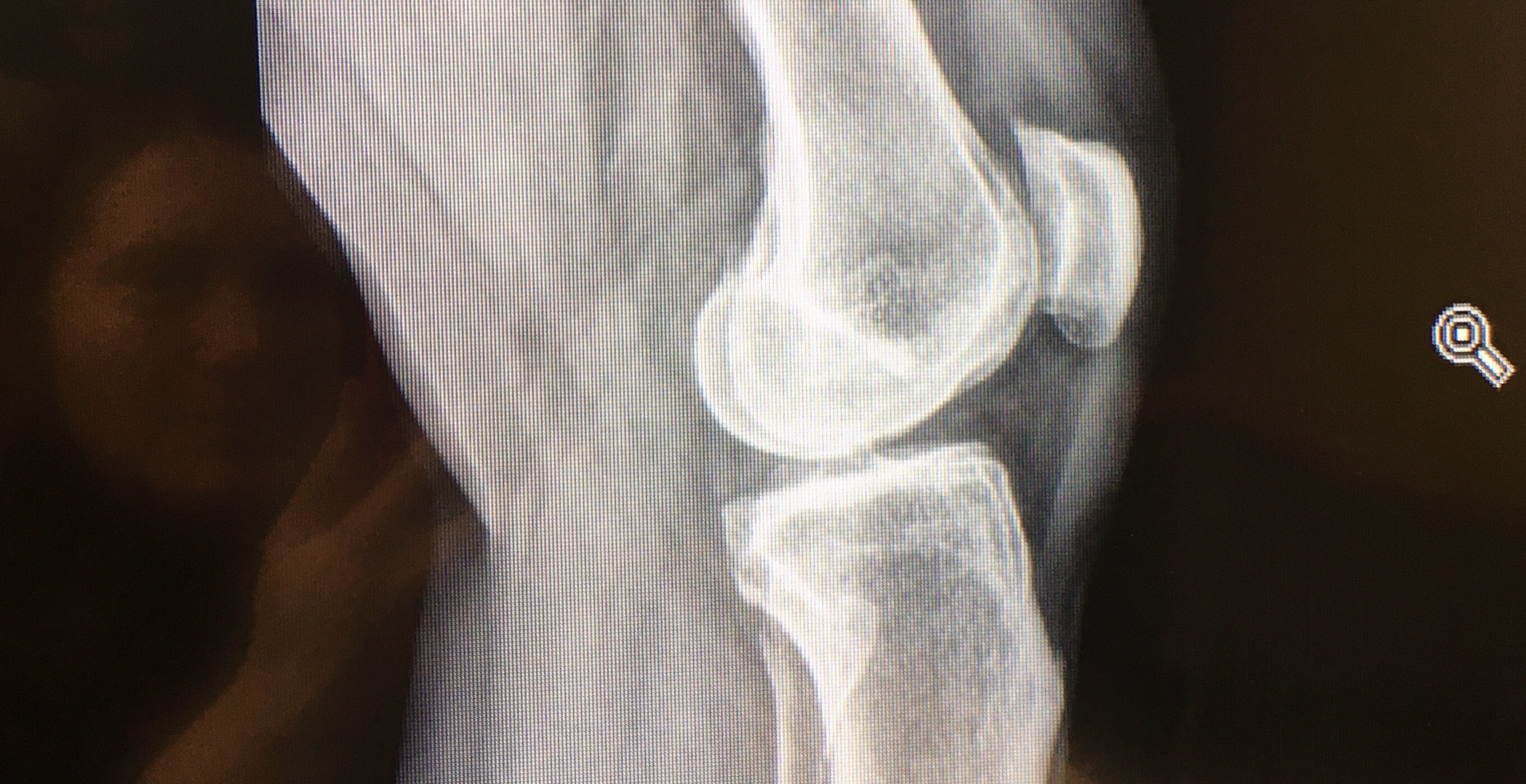
Anyone else had a rough couple of weeks? Two weeks ago I was diagnosed with arthritis in my left knee. The constant ache and sharp pain waking me up in the middle of the night had a name. My daughter didn’t make her middle school soccer team. Last year when I asked her why she played soccer she told me, “Because I want to play in middle school.” One dream crushed, she rebounded to play brilliantly in a club tournament , but lost in the finals. This all happened before I knew it was okay to be upset at upsetting things.
Last week was finals week. This was the first quarter in my almost three years of graduate school that I took two classes. For ten weeks I’ve been a demon. The pull of work, parenting, sports, pets, life, plus two graduate school classes – Geodatabases and Advanced Geospatial Statistics – was a grind. I was awful to my friends. I was negligent to my family. I was a drag on my projects at work. Everyone had been warned that this was going to be unpleasant, and it was on everyone.
If I finished successfully, I was going to celebrate. With those two classes finished I would only have two more classes left before my degree was complete. I was going to go have a drink with friends. I was going to apologize to my family, maybe go get ice cream. There were going to be donuts at work. Pizza too.
I finished Saturday, March 14th. No one went to the office on the 16th. There was no one to celebrate with. Getting ice cream with my family seemed irresponsible. COVID-19 hit and social distancing had started and my ten horrible weeks was transitioning into a different unknown horrible with an unknown timeline, but by then I’d finished Gailey’s book. I was angry and annoyed and frustrated, but I knew it’s okay to be upset at upsetting things.
Now, I sit in the same horrible chair I sat in for 10 weeks doing homework and I wish things were different. I wish my knee didn’t hurt. I wish my daughter had known the joy of making the team or winning the tournament – especially now when soccer looks unlikely until fall. (Please, let there be soccer in the fall.) I don’t wish I would have been kinder during my 10 weeks of school, because I just don’t work that way, but I do wish I could have had a moment of joy. Sharing with others the accomplishment that I’d done something really hard really well: 99.4% average between both classes – a not humble brag.
I wish my kid could see her friends. I wish I could see my friends. I wish my dad took the health risk of this disease more seriously. I hate that I have to keep sitting day in and day out in my homework chair, but now it’s my office chair, my school chair, my writing chair. It’s the only chair my butt is going to reside in for weeks? Months? But I am so grateful for the escape of books. That I can go to world where life is different. Where I can find wisdom from a bunch of magical teenagers:
“It’s okay,” she says, “It’s okay to be upset at upsetting things.”
There are times when all my roles in life — mother, graduate student, writer, and professional — threaten to draw and quarter me. I’m pulled in different directions and the pain of not doing my best at anything rips me apart. Then there are other times that epiphanies happen, and could only happen, because I see the world from so many angles.
It started with the note home from school. The anticipated but dreaded permission form for my daughter’s puberty class. The coming-of-age embarrassment of all children when they start to stink, have to think about a bra, or experience “nocturnal emissions”. Nocturnal emissions? When did wet dreams get such a fancy name? I reread the note to make sure it meant a boy waking up in sticky sheets. Yep. The note clearly said “nocturnal emissions.” Apparently it’s not just new math these kids are learning, but new puberty too.
That same week, I had to submit my graduate school capstone project proposal. I’m leveraging a work project on alternative fuel corridors to examine how the climate impacts of the World Cup and Olympics could be mitigated by utilizing alternative fuel. It’s a great proposal that hits the sweet spot of a school project for me: something that extends a work project and gets me credit from both school and clients. As I was researching my proposal I found some fascinating journal articles that discussed the importance of delivery timing during mega-events. The goal is to ensure that souvenir and food deliveries don’t impact spectators getting to events, and one of the strategies is to make deliveries at night.
Without warning, my writer brain engaged. I had the perfect proposal topic. If I shifted my focus to the Women’s World Cup happening in France this summer and refocused on the temporal aspects of the study I could title my capstone: Calculating Nocturnal Emissions resulting from the 2019 Women’s World Cup.
Fifth grade. It’s impossible to watch my daughter grow and not remember myself at her age. Fifth grade was a turning point. Fourth grade was rotten. Third grade was unremarkable. Second grade was amazing, but little kid amazing. I remember finally feeling like I was growing into myself in fifth grade. Watching my daughter start to navigate this school year I am struck that there is something more than a new year and a new teacher going on. For the first time, I can really see her starting to become the adult she will be someday – not in flashes, but in persistent displays of adult. Grown up. Not little kid.
The first day of fifth grade, my husband and I walked her up to school, like we had every single day of daycare, preschool, and elementary school. Then the ultimatum: we could walk her to the gate, but no farther. Most of the other kids’ parents didn’t drop them off at school, even in third or fourth grade, she explained, so it was time for us to stop too.
Last year this announcement might have stung. Two years ago, my feelings would have been hurt. Three years ago, I would have talked her out of her decision. Now? It was okay. I had been feeling the awkwardness myself. Watched the dwindling parents. Noticed the kids didn’t come and say “Hi Coach Johanna” anymore. Heck, I wasn’t even sure they remembered I was their second-grade soccer coach. In some ways it was a relief. Dropping her off a block from school gave me a chance to get to work on time and avoid the yoga-mom chit-chat after the bell rang.
Two weeks in, a new development. Her friend approached her about biking to school together. So, our routine shifted. My husband or I ride her to her friend’s house, then ride home while Afthead Junior and her buddy head to school. Now I’m out the door to work before school even starts, with a little bit of exercise under my belt, and the girls ride their bikes home alone every day.
I remember the freedom of walking home from school. I remember the fear when a new route creeped me out for some reason, and the joy of taking my time during a nice day or when there was a friend to walk with. I remember watching for mean dogs, like the one in the Ramona Quimby book. When my daughter comes home five minutes later than normal with a big grin on her face I’m happy for her freedom, for her exploration, for her independence. Sometimes she tells me why she’s late, and sometimes she doesn’t. It’s a step toward a more grown up relationship where she shares what she wants, not just because I’m her mom and she’s supposed to.
Heading out for our annual Labor Day camping trip I grabbed my favorite “won’t wash my hair for three days” headband. I pulled it on and heard the little elastic strings woven into the headband fabric snap. The band fell down. In the past year, while I wasn’t paying attention, the elastic had passed on into the land of non-stretchiness.
With my hair askew and my useless headband around my neck it hit me. There are no apron strings between parent and child. At least not in my situation. There is an elastic band holding us together. In the beginning it was tight tight tight. It held her inside me as she grew into a baby. It held her to me when she was an infant and couldn’t walk. The first snappings happened as she toddled away screaming “I can do it.” She needed more space. The band got less and less restrictive as she went off to preschool, kindergarten, elementary school. It was strong enough so that when her friends were mean, her coach yelled, or she failed at school the energy in the elastic always pulled her to me: back to safety and momma.
But now I can feel the elastic slipping. There are less stretchy bits left than non-stretchy bits. What will happen when all the elastic is gone? Will we toss it like a cheap pair of underwear? Like a swimsuit gone see-through and obscene? Will I store it away in some box where it will sit next to baby teeth going to dust, pulling it out occasionally to caress the rotting fabric and reminisce of days when our relationship was simultaneously simpler and more complicated. When I always stood between her and the dangers of the world. Will I brandish it at her when she doesn’t call or doesn’t come home for the holidays demanding she remember what I did for her? Or, will we keep it and use it when we need it? When her boyfriend (or girlfriend) dumps her, will she pull it out and wrap it around us? When her own baby is born will she stretch it around me and her own new elastic band providing an extra layer of support to a new precious life? When I’m infirm and heading to the rat-infested nursing home will she give it to me, so I can clutch desperately to the fragile ties between us? Whatever happens, these long-term connections are a choice, not a given as they were when she was tiny and wee.
Apron strings can be knotted, ripped open, re-typed, or left dangling at will. Our bond has more of an air of inevitability about it. Someday it will not be needed, but I hope it will be wanted. I hope there will always be days when she chooses to ask my advice, spend time with me, or just snuggle up next to me because she finds me a comfort. And I hope I’m brave enough and wise enough to give her the space she needs, letting the elastic continue to stretch to fit our ever-changing relationship.
Last week an early morning rush to band left her frazzled. The week of soccer, running, homework, early mornings, and late nights caught up with her. We’d barely seen each other between our non-coincident commitments. She gathered her trumpet and her backpack and then asked, just outside of school in view of any other early arrival, “Mom, can I have a hug?” I got out and held her while she cried. Then I opened the car door and told her, “Get in. You can practice trumpet at home.” We sat together in the basement, annoying her sleeping dad, while she played for me and pretended to be her band teacher: giving herself corrections and praise. An hour later I dropped her off at school and she ran in with her normal quick hug and “Love you mom.” I watched her turn the corner then drove off to start my own day.
Someday I will be a morning person. I will jump out of bed before the sun even rises, lace up my running shoes, greet the day with the chirpy birds, and let the pink glow of the sun warm my soul as it lights the sky. Upon arriving home, I will feed the chickens and barn cat — respectively thanking them for my eggs and for killing the rats. Then I will feed the house cats and take a moment to appreciate the happiness they bring to my life. Exercise, gratitude, and chores complete, I will shower, shave, and be ready to greet my waking family with well-groomed joy knowing my day has begun with no sleeping-in or running-late guilt.
Someday my body will be a temple. I will feed it nothing but wholesome food. All the fruits and veggies it can take. Eggs from my beloved chickens. Cheese from cows lovingly hand milked in pastures where they eat nothing but all organic free range vegetation. I will cook my own meals, and when I can’t, I will only eat at restaurants that also consider my body a temple worthy of local low-carbon-emission produce. Occasionally I will allow myself a treat of a single square of bitter dark chocolate, so I can savor both the sweet of the dessert and the bitterness off mistreating my temple. The only beverage I will ever drink is pure clean water from glass containers. I will exercise everyday, but vary my routine from running to yoga to Pilates to ensure my cardiovascular health, flexibility, and strength.
Someday I will be on time to everything. After my blissful morning and my temple-worthy breakfast I will drop my child off at school exactly seven minutes early. Time for her to play a bit, and visit with her friends. Then when the bell rings I will walk my perfectly dressed self — in a size six, a slim nonjudgmental size — to my car and drive to work, arriving exactly at 8:30. People will depend on me, knowing if they schedule an 8:30 meeting I will be there nonplussed and ready to face whatever challenge they need faced. After working an 8 hour day — not including the 0.5 hours spent enjoying the wholesome lunch I packed, then walking around the park to clear my mind — I will be waiting for my daughter at 3:00, just as the bell rings, to walk her home from school. Hand in hand, we’ll talk about her day and my day as we much on fresh vegetables from our garden. She will have friends, I will be successful at work, she will be successful at school, and we will be so proud of each other. Then I’ll drive her, and all her friends, in my electric vehicle — powered by solar panels installed on our home’s roof — to whatever practice she has that day: carpooling to ensure our position in the social hierarchy while minimizing our carbon footprint.
Someday I will make good use of all the time available to me. While my daughter practices I’ll be using that time to write my novel, do grad school homework, catch up with beloved friends and family, or knit scarves for the poor. However, I will willingly pause to talk with other sports parents where I will be modest about my child and supportive of their children and their worries about traffic. I won’t squander time dinking on my phone, talking to parents who make me want to stab my eyes out, or half-listen to eye-stabby parents while dinking on my phone. I will be present and understanding.
Someday my evenings will run like clockwork. After practice, I’ll enjoy a wholesome meal with my family. We will all eat exactly the same thing, correctly proportioned to our body mass index. Dishes will be cleared, washed, and the kitchen will be cleaned in harmony, then everyone will sit down to homework. (Well, everyone but my husband who will enjoy a well deserved hour of rest watching some sporting event, but he will not be too loud or too emotionally attached to the event.) Homework done, my daughter will bathe, and I will read aloud to her for 20 minutes. Then she will make her lunch, brush her teeth, brush her hair, put on pajamas, and deposit her dirty clothes into her hamper. She will go to sleep by herself in her own room in her own bed after reading to herself for exactly 10 minutes.
Someday my late nights will be all my own time. Having accomplished everything I needed to do while in the office, I will spend 45 minutes catching up with my husband. 2.5 times per week we will have age-appropriate sex. Sated or not, I will then spend a few hours editing my novel, writing a blog post, or drafting a new short story. Sometimes, I will work a bit on a knitted gift for a friend, or hand-write a few thank you notes. Occasionally I will document my day’s accomplishments in a perfect Instagram shot or Tweet. Before bed, I will do a quick clean up of the house – filling the dishwasher, folding laundry, picking up clutter, sweeping, and wiping down counters and other surfaces – before reading for 30 minutes and then drifting off for an uninterrupted eight hours of sleep.
The perfect family stood in line waiting to select their bagels. Two parents — the expected mom and dad — and three adult children out for Sunday breakfast. The attractive eldest stretched to at least 6’4″ if you measured to the tip of his glossy black hairstyle: spiked enough to be stylish, but not so much as to be inappropriate for one closer to 30 than 20. The daughter’s lithe body, draped in a dark red lace shawl, clicked past me on sensible-heeled above-the-knee boots on her way to the restroom. Her face was beautifully sculpted, framed by the sleek black hair, but she kept her eyes lowered as she excused herself while slipping past me.
“Check this out,” the oldest held out a smart phone and bent over his smaller brother. Glasses slightly askew the third child moved with less grace than his siblings, or others in line. His face, his glasses, and his demeanor conveyed an extra chromosome or perhaps an abnormality in one. The third child belatedly smiled at the phone and the mother beamed as her eldest protected her most vulnerable.
The father, had he been straight, would have neared the height of his son. Stooped as he was, the top of his head reached the same height as the mother. Trying to make sure her family didn’t cause an inconvenience, the mother directed her sons to the menu ensuring their orders would be ready the moment they reached the front of the line. She was a strong looking woman, not lithe like her daughter, but fit and powerful: the backbone of her perfect family.
“Let’s check it out,” the older brother motioned to the menu and his brother’s gaze slowly followed.
The daughter breezed back from urinating, or fixing her hair, or her pre-breakfast bulimic purge. Upon arriving back she closely conferred with her mother, who left for her own bathroom ritual. Catching me watching her family she smiled an eye crinkling smile at me, which I returned. Her joy at having her family together was genuine.
His wife gone, the father took on the shepherding of his family. They stood closer together than a normal family of adults might, always keeping the third child toward the center as if protecting him from outsiders. The daughter’s shawl provided a physical barrier to her brother as she placed her hand on his rounded shoulders. The moment it was time to order they efficiently stepped up one by one and succinctly selected their bagels. Returning, the mother walked directly to the cashier confident her order would be accurately conveyed by her daughter. While waiting to pay, the mother surveyed the tables for one that would seat her family of five.
The only mishap was when the youngest son and father approached the drink cooler. Apparently drinks had not been accounted for during their in-line planning, so they had to backtrack. I stepped back to give them access to the cooler. The son reached for a bottle of orange juice and mistakenly grabbed orange mango instead. “That’s orange mango,” the father corrected, “or do you want to try something new?”
“I’ll check it out,” replied the third child echoing the sentiments of his majestic older brother. His speech was deliberate.
The father paused reaching toward the traditional orange juice, but changed his mind at the last minute veering toward orange mango. “I’ll check it out too.” He nodded my direction in acknowledgement of the minor inconvenience he and his son had caused during their drink selection.
My order placed, paid for, and received, I walked to the soda dispenser. The family had settled at a high top table with four seats nearby, father opting to stand rather than take a seat from another table. They were not a family to take more than the appropriate allotment of chairs. As I turned to go, I heard one of the family’s men utter, “…check it out,” and I wondered at what point did that repetitive phrase break the sister’s or mother’s perfect facade. I knew I would break, but their life was not mine. Perhaps the phrase was their own security blanket. One that conveyed their belief in open-mindedness, curiosity, and willingness to make the best of what life had to offer.




 I read because I love stories. I love being transported into another person’s world and perspective. Occasionally, reading helps me understand life. Last week I was finding respite from the chaos of real life, reading

 Afthead